
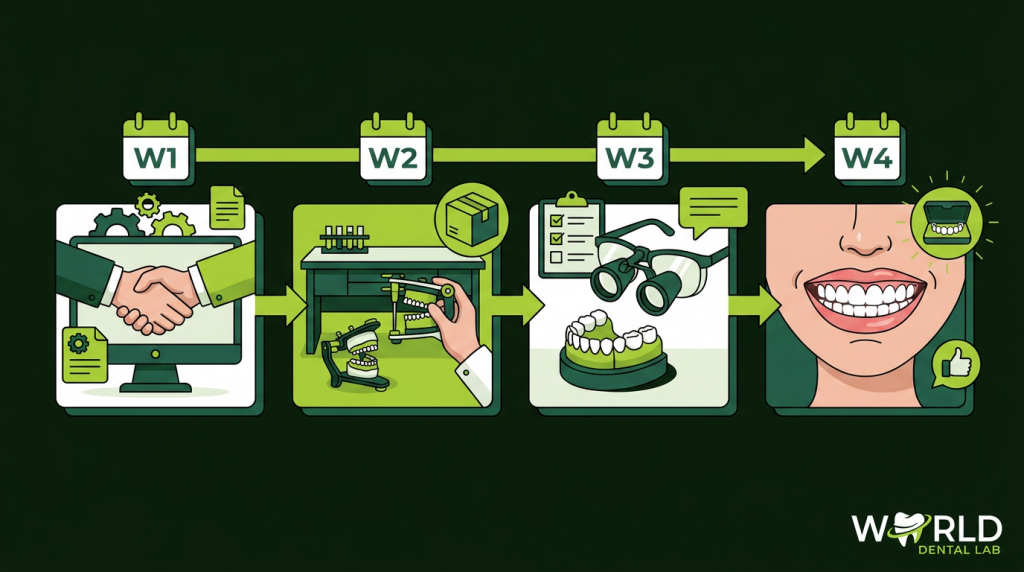
Starting with a new dental lab outsourcing partner involves more than placing your first order. The first 30 days establish the workflow patterns, quality benchmarks, and communication habits that will define the relationship for months or years. Labs that invest in a structured onboarding process see dramatically better long-term outcomes than those that simply start sending cases and hope for the best.
This guide walks through what to expect — and what to do — in each week of your first month.
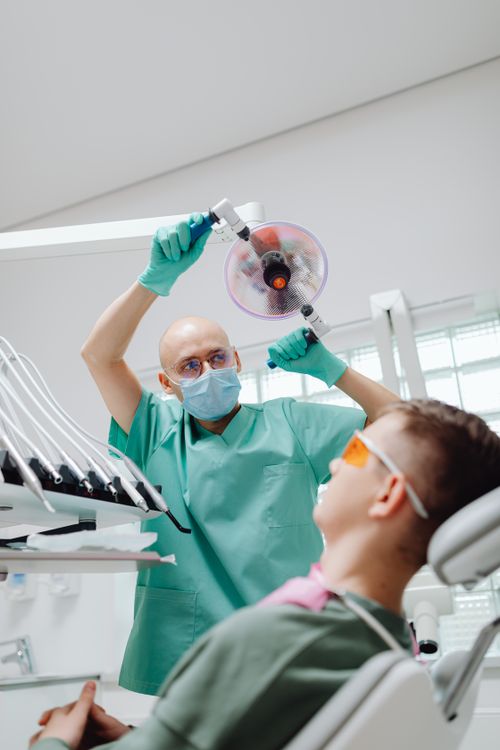
Week 1: Setup and First Trial Cases
Account Setup
In the first week, complete the administrative setup with your new partner:
- Account registration: Provide practice/lab details, billing information, delivery address, and preferred communication contact
- Compliance documentation: Request and file the lab’s ISO 13485 certificate, materials specification sheet, and warranty policy document. If your jurisdiction requires a supply agreement (e.g., for HIPAA/GDPR data handling), complete this now
- Workflow setup: Confirm which scan formats are accepted, how to submit case forms, which communication channel to use for queries, and who your account contact is
- Price list: Obtain written pricing for all restoration types you intend to order. Confirm whether prices include shipping or are ex-works
Trial Cases
Submit 3–5 trial cases in Week 1 across your most common restoration types. If you’re starting with single-unit zirconia crowns, send 3 — including at least one anterior case that requires accurate shade matching. For partner selection criteria, see our guide to choosing a dental lab outsourcing partner.
What to include in each trial case submission:
- Prepared arch scan (STL — ensure margins are fully captured)
- Opposing arch scan
- Bite registration scan
- Completed case form (tooth number, material, shade, pontic design if applicable)
- Any notes on challenging aspects of the case
What to evaluate when trial cases arrive:
- Margin fit — seat on model or stone die; check for rock or gap
- Shade accuracy — compare to shade tab and prescription
- Proximal contacts — check tightness and location
- Occlusal contacts — check in MIP and excursions
- Surface finish — look for pitting, rough margins, or uneven glaze
- Packaging — clean, labelled, and correctly identified
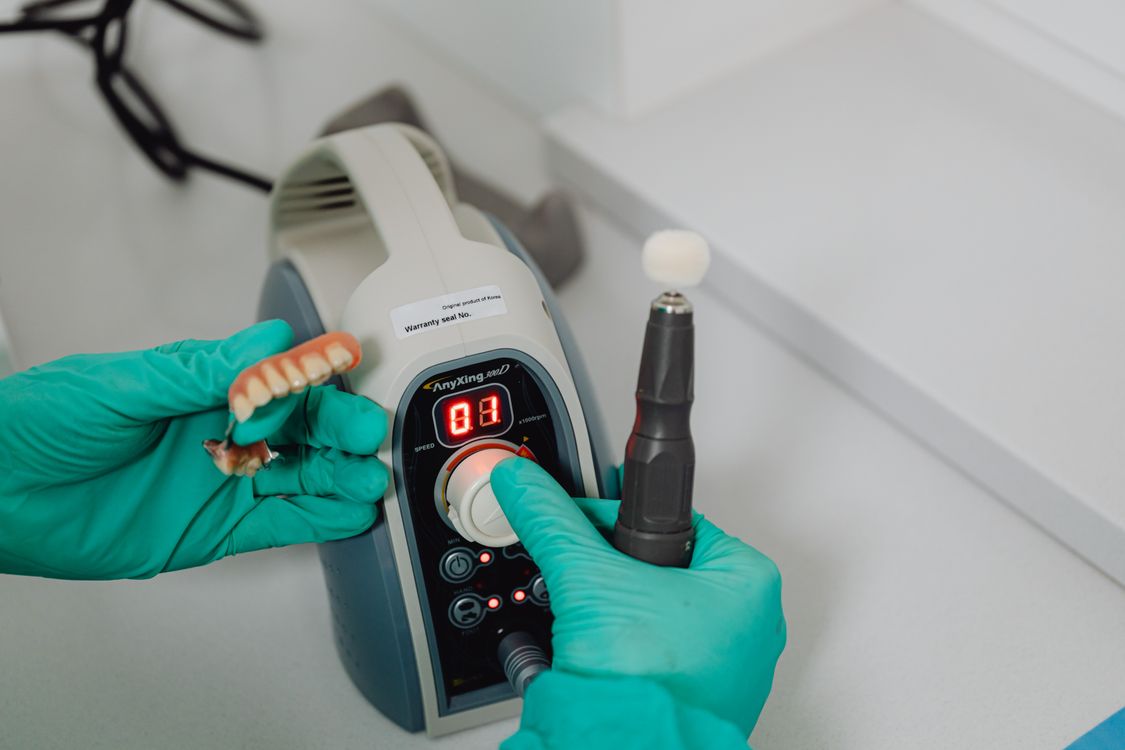
Week 2: Evaluate and Calibrate
Review Trial Case Results
By Week 2, your trial cases should have arrived. Review each one carefully and document your findings. If any cases need adjustment or remake, submit the request immediately and note the response time and process.
Questions to answer after Week 1 trial cases:
- Did cases arrive within the stated turnaround time?
- Was tracking information provided proactively or only on request?
- Were all cases packaged and labelled correctly?
- Were there any quality issues — and if so, how did the lab respond?
- Was communication responsive (under 24 hours for any queries)?
First Calibration Conversation
Schedule a call or video meeting with your account contact in Week 2. This is the single most valuable investment you can make in the relationship. Discuss:
- Your shade preferences and any cases where shade accuracy was not achieved
- Your margin fit expectations and how you assess fit (digital or physical model)
- Any special clinical situations in your typical case mix (bruxers, implant systems you commonly use, challenging anterior aesthetics)
- Any workflow friction points encountered in Week 1
A lab that takes notes, asks follow-up questions, and follows up in writing is demonstrating the relationship investment that predicts good long-term performance. For turnaround benchmarks to reference in this conversation, see our dental lab turnaround time guide.
Send Additional Trial Cases
Send 3–5 more cases in Week 2, incorporating any feedback from your Week 1 calibration. If you plan to send implant cases, submit your first implant trial now with the implant system details clearly specified.
Week 3: First Production Cases
If Week 1–2 trial cases have performed well, Week 3 is when you send your first “real” production cases — restorations that will seat on actual patients.
Start Narrow
Do not immediately route your entire case mix through the new partner. In Week 3, route only your most standardised case type — typically single-unit posterior monolithic zirconia crowns. This limits clinical risk while you continue building confidence in the workflow.
For pricing reference on this case type, see our dental lab outsourcing cost guide.
Schedule Patient Appointments With Buffer Time
For the first month, add 1–2 days of buffer to your expected delivery date when booking patient seat appointments. This protects you if a case arrives with a minor issue or if turnaround runs slightly longer than expected. As you develop confidence in the turnaround reliability, you can reduce or eliminate this buffer.
Track Everything
Start a simple quality log for outsourced cases in Week 3. For each case, note:
- Date submitted
- Case type and restoration specification
- Date received
- Quality outcome (seat as delivered / minor adjustment / remake)
- Any notes on specific issues
This log gives you the data to calculate your own remake rate and turnaround performance — the most accurate benchmarks you will have. After 20–30 cases, this data tells you far more than anything the lab self-reported.
Week 4: Review, Decide, and Plan Expansion
30-Day Review
At the end of Week 4, conduct a structured review of your first month. Use your quality log data:
- Remake rate: What percentage of cases required a remake or adjustment? Under 3% is acceptable; under 2% is good; under 1% is excellent
- Turnaround adherence: What percentage of cases arrived within the stated turnaround? 95%+ is the target
- Communication quality: Average response time to queries; any unresolved communication issues
- Shade accuracy: How many cases required shade adjustment at seating?
- Total cost: Per-unit cost plus shipping plus remake cost plus time managing issues — compare to your previous lab
Decision: Continue, Adjust, or Switch
After 20–30 cases and a structured review, you have enough data to make an informed decision:
- Continue and expand: Quality, turnaround, and communication are meeting expectations. Begin expanding the case mix to additional restoration types.
- Continue with calibration: Quality is acceptable but there are specific patterns to address (e.g., shade accuracy in a particular shade range). Have a calibration conversation and retest.
- Switch: Remake rate above 5%, communication consistently slow, or unresolved quality issues after calibration. A 30-day trial period is sufficient to identify a lab that isn’t working — don’t extend a bad relationship hoping it will improve.
Expansion Planning
If the first month has gone well, plan the second month’s expansion:
- Which additional restoration types will you add? (e.g., bridges, implant crowns, veneers)
- What volume increase do you plan? (e.g., 10 cases/month → 25 cases/month)
- Are there any workflow improvements to implement? (e.g., standardising case form submission, automating shipping notifications)
Common First-Month Issues — and How to Handle Them
Case arrives later than expected
Contact the lab immediately and ask for updated tracking. Determine whether the delay was in production or shipping. If in production, ask the reason and whether it will affect turnaround going forward. If it’s a customs or DHL delay, note the route and check whether this is a recurring pattern on that shipping lane.
Shade accuracy is off on first cases
Shade calibration is the most common first-month issue — it almost always improves with a calibration conversation. Send a shade photo with the case, specify your preferred shade system (VITA Classical vs. VITA 3D-Master), and note any specific shade nuances (more chroma in the gingival third, more translucency in the incisal). Shade accuracy typically improves significantly after 5–10 cases as the lab calibrates to your clinical context.
A case needs a remake
Submit the remake request with photos showing the issue. The remake should be produced and dispatched within the standard turnaround time. How a lab handles its first remake request tells you more about the relationship than the initial sales process did — note response speed, attitude, and whether they ask questions to understand the root cause or simply reproduce without investigation.
Start Your First Month with World Dental Lab
World Dental Lab provides dedicated account management, same-day response to case queries, and a 2-year warranty on all restorations. We’ve onboarded clients in 32 countries with a structured first-case protocol.
