
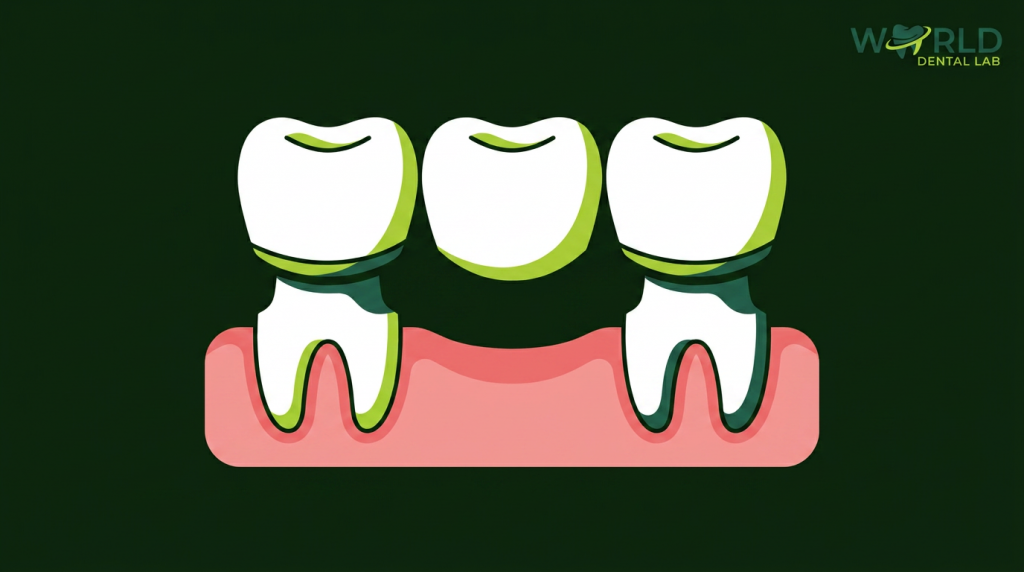
A dental bridge is a fixed prosthetic restoration that replaces one or more missing teeth by spanning the gap between adjacent natural teeth (abutments) or implants. Unlike dentures, bridges are cemented or screwed in permanently and cannot be removed by the patient. For dental labs, bridges represent one of the most technically demanding restoration categories — requiring precise fit, occlusal balance, and durable connectors.
How a Dental Bridge Works
A conventional bridge has three components:
- Abutment crowns: Crowns placed on the teeth or implants on either side of the gap, which anchor the bridge
- Pontic(s): Artificial tooth/teeth that replace the missing teeth and span the gap
- Connector: The rigid joint between pontic and abutment — must withstand occlusal forces without fracture
The lab fabricates the entire bridge as a single rigid unit. The dentist cements or screws it into place in one appointment (after a trial fitting).
Types of Dental Bridges
1. Traditional Fixed Bridge
The most common type. Both abutment teeth are prepared (crowned), and a pontic spans the gap. Used when natural teeth exist on both sides of the gap.
Span limit: Generally 3–4 units for posterior; longer spans require engineering consideration for material deflection.
2. Cantilever Bridge
The pontic is supported by only one abutment — appropriate when there is only one adjacent tooth, typically in anterior situations. Less common due to higher mechanical stress on the single abutment.
3. Maryland Bridge (Resin-Bonded Bridge)
A conservative option for anterior tooth replacement. Metal or ceramic wings are bonded to the lingual surfaces of adjacent teeth with minimal or no preparation. Suitable for young patients where irreversible tooth preparation is undesirable.
Limitation: Lower retention than conventional bridges; requires excellent adhesive protocol.
4. Implant-Supported Bridge
Anchored by dental implants rather than natural teeth. No natural abutment preparation required. The strongest long-term solution for multiple missing teeth. For a full comparison of implant-supported vs traditional bridge designs, see Implant-Supported Bridge vs Traditional Bridge. For cases replacing a full arch, see our full arch zirconia guide.
5. All-on-X (Full-Arch Implant Bridge)
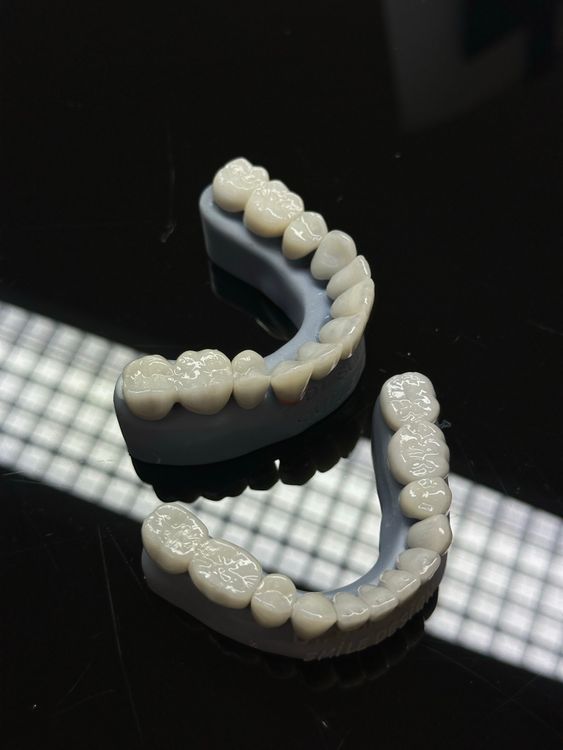
A full-arch prosthesis supported by 4–6 implants. Replaces all teeth in one or both arches. Produced in zirconia (monolithic) or titanium framework with acrylic or zirconia teeth. This is among the most complex restorations a dental lab produces.
Bridge Materials in 2026
| Material | Best For | Strength |
|---|---|---|
| Zirconia (monolithic) | Posterior bridges up to 4 units | 700–1,200 MPa |
| Zirconia framework + ceramic | Anterior high-esthetic bridges | High (substructure) |
| E.max (lithium disilicate) | 3-unit anterior bridges only | 400 MPa |
| PFM | Long-span, cost-sensitive cases | High (metal frame) |
| Full-cast metal | Posterior where esthetics not critical | Very high |
How Dental Labs Fabricate a Bridge
The fabrication process for a modern digital bridge:
- Scan data reception: Lab receives STL files of prepared abutments, opposing arch, and bite registration from the clinician
- CAD design: Technician designs the bridge in 3Shape or exocad software, setting connector dimensions, pontic emergence profile, and occlusal contacts
- Connector sizing: Critical — connector cross-section must meet minimum requirements: typically 9 mm² (anterior) to 16 mm² (posterior) in zirconia to prevent fracture
- Milling: Bridge milled from zirconia blank with correct enlargement factor for sintering shrinkage
- Sintering: 1,400–1,500°C, 2–8 hours
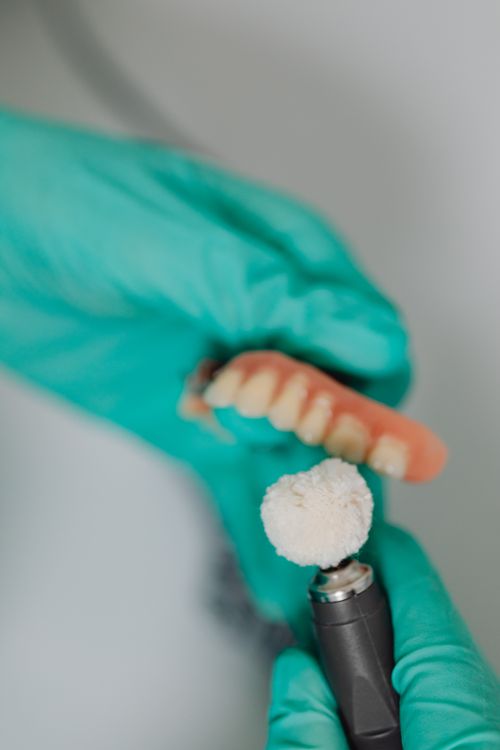
- Characterization: Staining, glazing, or layering depending on material and esthetic requirement
- Quality check: Internal fit, margin integrity, occlusal contacts, proximal contacts verified
Key Parameters for Ordering a Bridge From a Lab
When submitting a bridge case to an outsourcing lab, include:
- Tooth numbers and span configuration
- Material specification (monolithic zirconia, layered, e.max, etc.)
- Pontic design preference (ovate, modified ridge lap, hygienic)
- Shade
- Cement space setting
- Any implant component details if implant-supported
World Dental Lab produces bridges from 3-unit to full-arch for labs in 32 countries. Our CAD/CAM design service handles bridge design for labs that outsource design work separately from production.
Order Dental Bridges From World Dental Lab
We fabricate 3-unit to full-arch bridges in zirconia, e.max, and PFM. White-label packaging, 2-year warranty, and 32-country shipping.
