
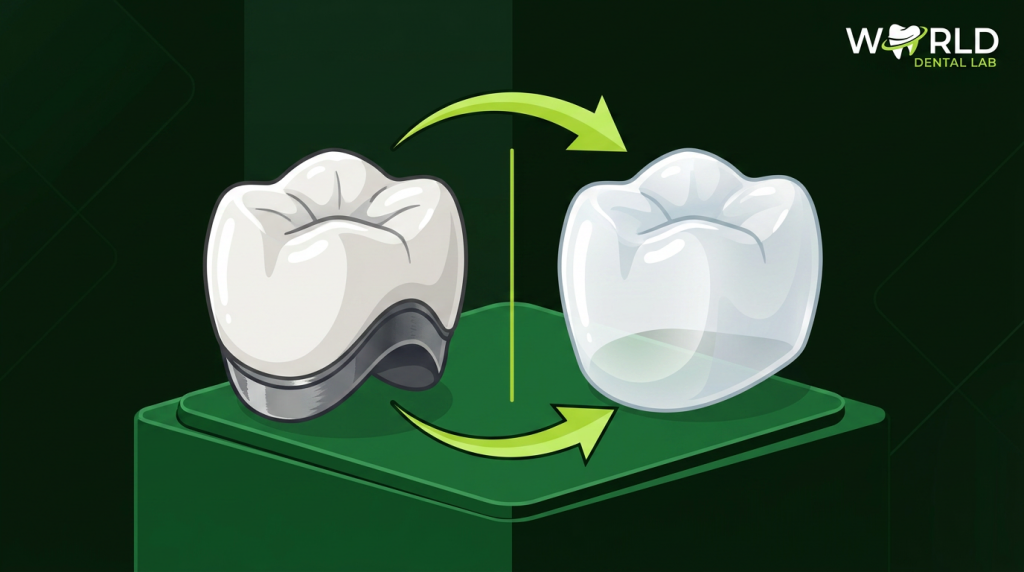
For more than 40 years, porcelain-fused-to-metal (PFM) crowns were the gold standard of dental restoration. Today, zirconia has largely displaced PFM in most clinical situations. But “largely” is not “completely” — understanding when each material excels is still essential knowledge for any dental lab or clinician.
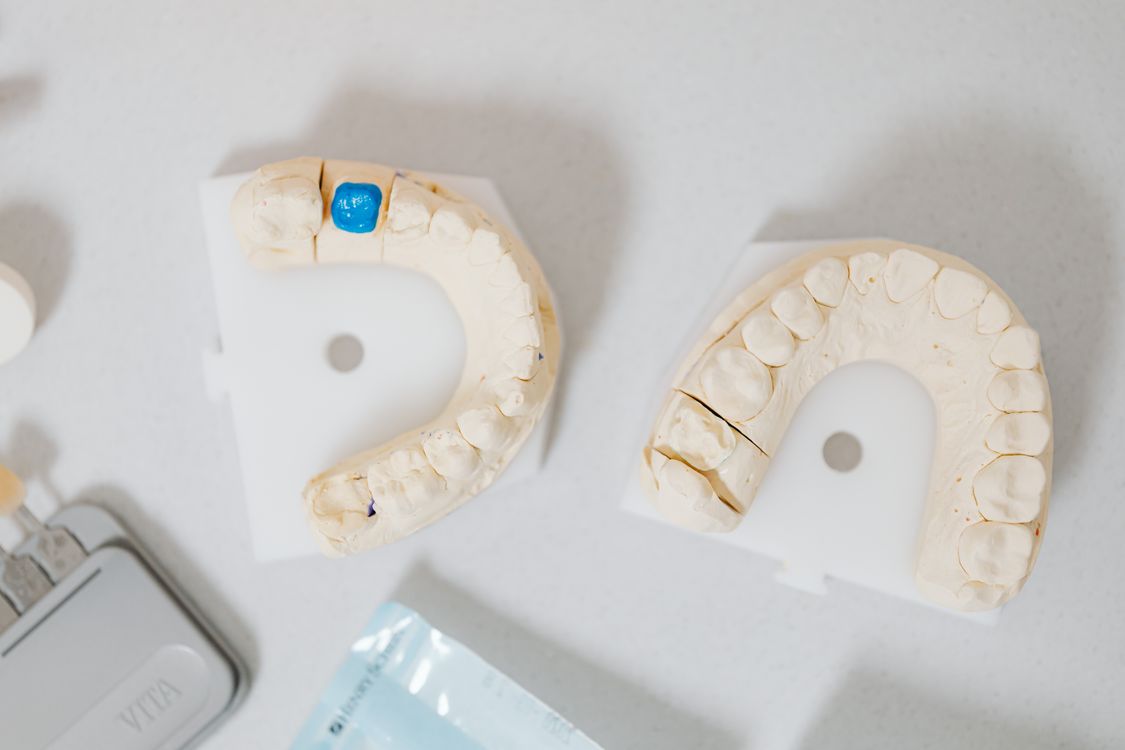
What Is a PFM Crown?
A porcelain-fused-to-metal crown consists of a metal alloy substructure (typically base metal, high noble, or noble alloy) onto which feldspathic porcelain is hand-layered and fired. The metal provides strength; the porcelain provides aesthetics.
PFM crowns have decades of clinical evidence — long-term studies show survival rates of 90%+ at 10 years for single-unit restorations.
What Is a Zirconia Crown?
Zirconia crowns are milled from yttria-stabilized zirconium dioxide blocks. Modern monolithic zirconia crowns are produced entirely in zirconia — no veneering porcelain — eliminating the chipping risk that affected second-generation layered zirconia. For a deeper look at zirconia materials and generations, see our complete zirconia crown guide.
Head-to-Head Comparison
| Property | PFM | Zirconia (Monolithic) |
|---|---|---|
| Flexural strength | ~400 MPa (porcelain) | 700–1,200 MPa |
| Chipping risk | Moderate (5–10%/5yr) | Very low |
| Metal allergenicity | Possible (base metal) | None |
| Gingival margin appearance | Dark line risk | No dark line |
| Translucency | Good (layered porcelain) | Good–excellent (5th gen) |
| Radiopacity | Very high (metal) | Moderate |
| Wear on opposing teeth | Low–moderate | Moderate (glazed surface better) |
| Lab fabrication time | 3–5 days | 1–3 days (milled) |
| 10-year survival rate | ~90% | ~93–96% (emerging data) |
Cost Comparison: Lab Perspective
For dental labs, PFM and zirconia have different production cost structures:
PFM Production Costs
- Metal alloy: $15–60/unit (base metal) or $80–200/unit (high noble/noble)
- Casting equipment, burnout furnace, investment materials
- Skilled hand-layering labor: significant time investment
- Firing furnace cycles: 4–6 firings per restoration
Zirconia Production Costs
- Zirconia blank: $8–30/unit depending on brand and translucency
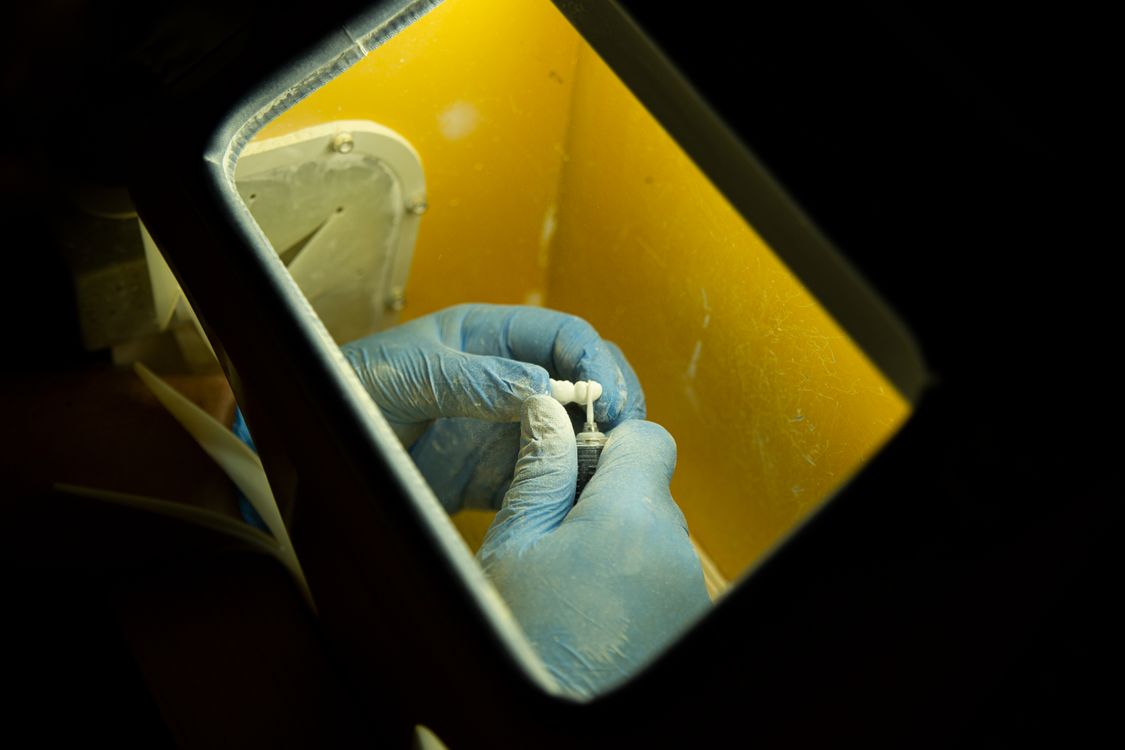
- Milling time: 20–45 minutes/unit
- Sintering: 2–8 hours (batch process — many units per run)
- No casting equipment required
For most labs, zirconia production costs are lower than PFM once CAD/CAM equipment is amortized — particularly for high-volume output where batch sintering becomes efficient.
When PFM Is Still the Right Choice
Despite zirconia’s advantages, PFM remains clinically appropriate in specific situations:
- Very short clinical crowns where prep height limits zirconia margin design options and metal substructure is preferred
- Long-span bridges (4+ units) where metal framework rigidity reduces deflection risk
- When exact shade matching is critical and layered PFM porcelain matches existing dentition better than available zirconia options
- Patient budget constraints — in some markets, base-metal PFM remains the most affordable option
- Existing restorations — when replacing a PFM in a complete arch case, consistency may favor continuing with PFM
When Zirconia Is the Clear Winner
- Posterior single-unit crowns — zirconia’s strength advantage is most valuable here
- Implant-supported crowns — no dark metal abutment showing through
- Patients with metal allergies or sensitivities
- Cases where gingival recession risk creates concern about dark margins
- Labs with CAD/CAM capability looking to reduce per-unit labor costs
The Industry Trend: Where PFM Stands in 2026
The American Dental Association’s Health Policy Institute data shows PFM prescription rates declining at approximately 3–5% per year since 2018, while zirconia has grown correspondingly. For a direct comparison of zirconia against e.max, see E.max vs Zirconia: Which Material Is Right for Each Case. Many dental schools have reduced or eliminated PFM casting instruction in favor of digital workflows.
The clinical consensus: zirconia is the default choice for most single-unit restorations. PFM retains a valid role in specific clinical situations and markets where cost remains the primary driver.
Order PFM or Zirconia Crowns From World Dental Lab
We produce both PFM and zirconia crowns for labs and clinics in 32 countries. Our team can advise on material selection for each case type.
