
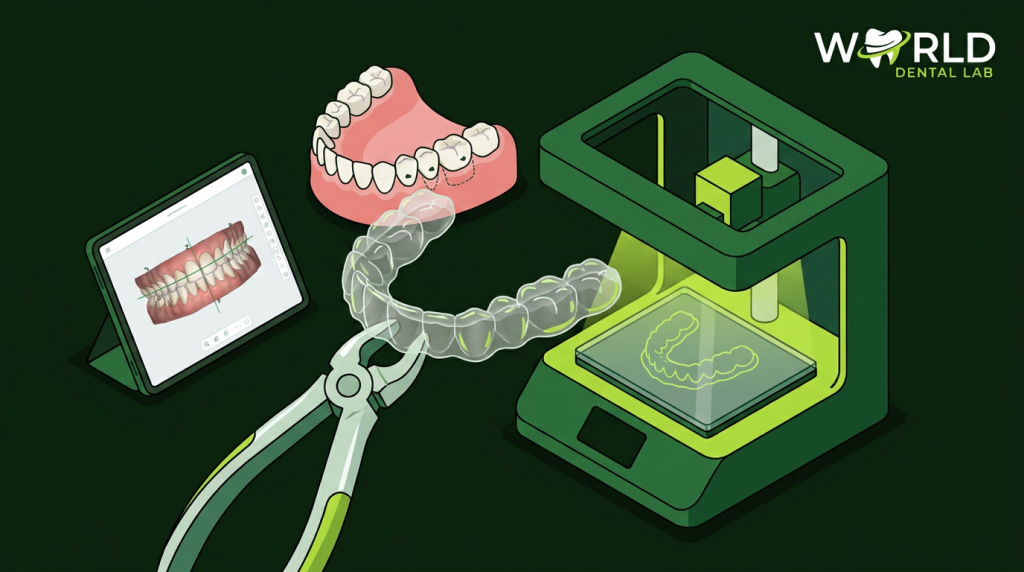
Clear aligners have transformed orthodontics — and dental labs are at the centre of that transformation. Whether producing aligners for an in-house ortho brand, a DSO, or individual clinicians, understanding the fabrication process helps labs deliver consistent quality and helps clinicians communicate realistic expectations to patients.

The Two Clear Aligner Production Models
Before diving into fabrication, it’s important to understand the two business models in the aligner market:
- Proprietary platforms (Invisalign, ClearCorrect, etc.): The clinician submits the case to the aligner company’s platform. Treatment planning is done by the company (or their software), and trays are produced at their central facility. The lab is not involved.
- In-house or outsourced lab production: The clinician submits a scan to a dental lab. The lab uses software (3Shape Ortho Analyzer, Maestro3D, OrthoSelect, etc.) to plan tooth movements and produce aligner trays in-house or via an outsourcing lab partner.
This guide focuses on model 2 — lab-produced aligners.
Step 1: Case Receipt and Treatment Planning
The process begins with the clinician submitting:
- Upper and lower arch digital scans (STL or proprietary format)
- CBCT data (optional but recommended for complex cases)
- Photos (frontal, lateral, occlusal)
- Treatment prescription: target tooth positions, treatment goals, clinician preferences on staging
The lab’s treatment planning team or software segments each tooth digitally and plans the sequence of movements. Each movement stage is typically 0.2–0.3 mm of translation or 2–3° of rotation per aligner.
Step 2: 3D Model Printing
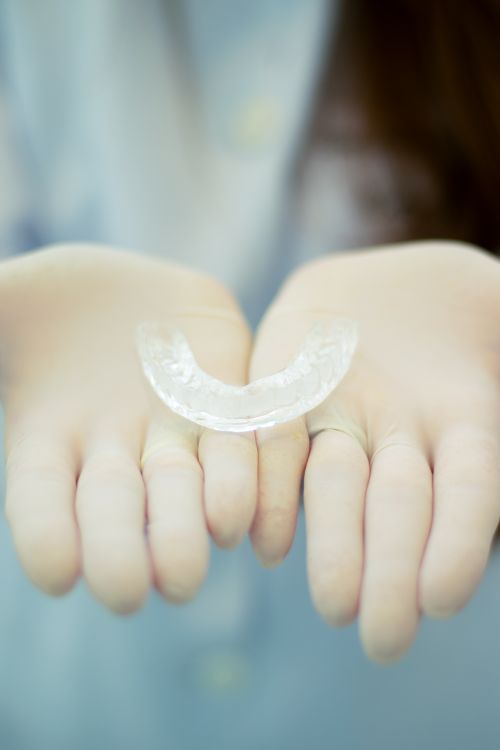
Once treatment stages are approved, the lab prints one dental model per aligner stage. For a 20-stage case, this means 20 printed models per arch (up to 40 models total).
Printing requirements:
- Printer resolution: minimum 50–100 µm layer height for sufficient tooth surface detail
- Material: photopolymer resin (biocompatible, FDA-cleared where required)
- Post-processing: UV curing, support removal, surface smoothing
- Dimensional accuracy: ±0.1 mm tolerance for predictable tooth movement
Print quality directly affects the fit of the aligner tray — which determines the clinical accuracy of each tooth movement step.
Step 3: Thermoforming the Aligner Tray
The aligner material is thermoformed over each printed model using a pressure or vacuum forming machine.
Common aligner materials:
- PET-G (polyethylene terephthalate glycol): Clear, hard, affordable — widest use in lab-produced aligners
- TPU (thermoplastic polyurethane): Softer, more comfortable — better patient acceptance but slightly less force delivery
- Multi-layer laminates: Hard outer layer + soft inner layer — combines force delivery with comfort
Thickness: Most aligner materials are 0.75 mm or 1.0 mm — thicker for retention appliances, thinner for active movement phases.
Step 4: Trimming and Finishing
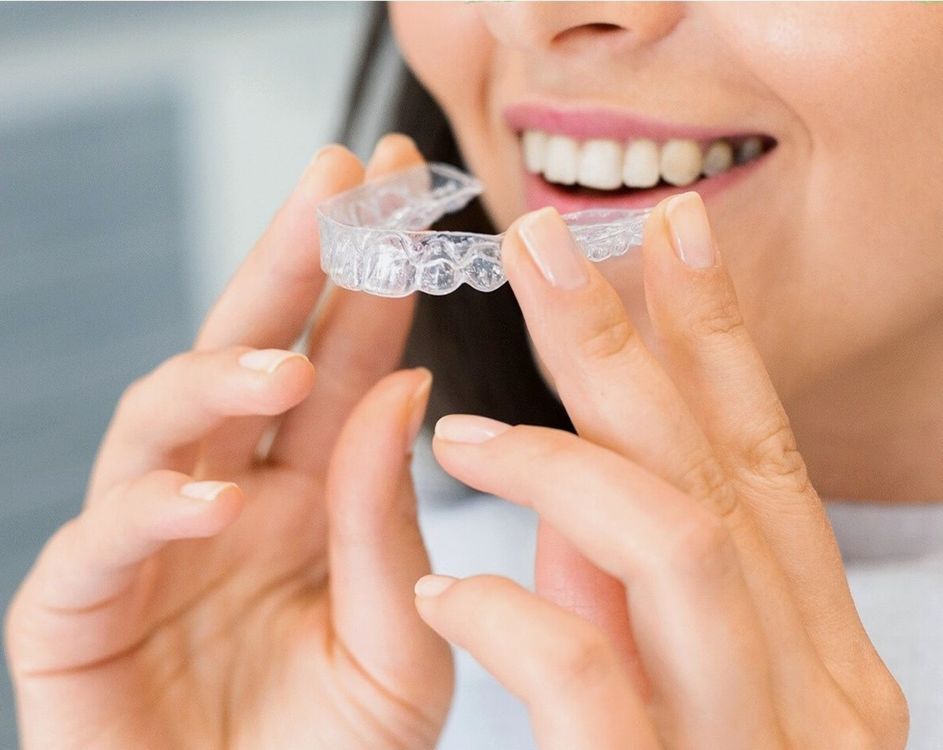
After thermoforming, the tray is trimmed from the model and finished:
- Trimline follows the gingival margin (scalloped trim) or runs straight across (flat trim)
- Edges are polished to remove any sharp areas that could irritate soft tissue
- Attachments are pre-formed into the tray if planned (composite attachment templates)
- Each tray is numbered and labelled (stage number, upper/lower, patient ID)
Step 5: Quality Check and Packaging
- Each tray is seated on its corresponding model and checked for passive fit
- Trimlines inspected for consistency and smooth finish
- Trays packaged in sequential order with labelling for patient use
- For white-label partners, trays are packaged in unbranded or partner-branded pouches
What Labs and Clinicians Should Know About Quality
Not all aligners are equal. The key quality variables are:
- Treatment planning accuracy: Poor staging (too much movement per step) leads to non-tracking — the tray doesn’t seat properly by mid-treatment
- Print resolution: Low-resolution prints introduce dimensional error at every stage
- Material quality: Inferior thermoforming materials lose elastic memory faster — reducing force delivery before the planned wear period ends
- Trim quality: Rough trimlines cause patient discomfort and reduce compliance
Order Clear Aligners From World Dental Lab
World Dental Lab produces custom clear aligners for clinicians and lab partners in 32 countries. Our aligner service includes digital treatment planning, 3D printing, thermoforming, and white-label packaging.
