
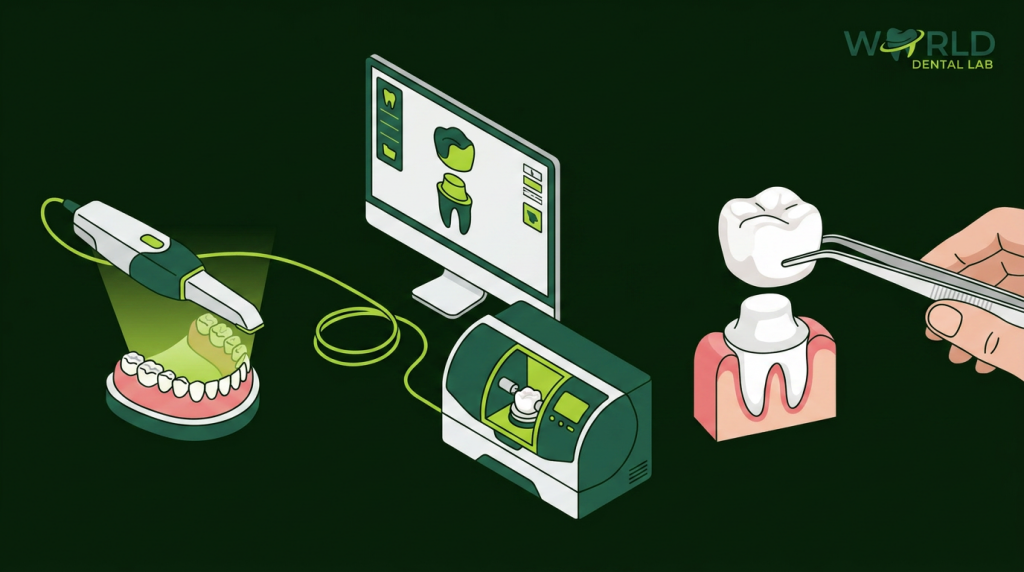
Patients receive a dental crown and assume it was produced quickly and simply. In reality, a high-quality crown involves a precise sequence of steps that, when done correctly, produces a restoration that fits accurately, functions correctly under occlusal loading, and lasts for 15–20+ years. This guide walks through the complete manufacturing process for modern dental crowns.
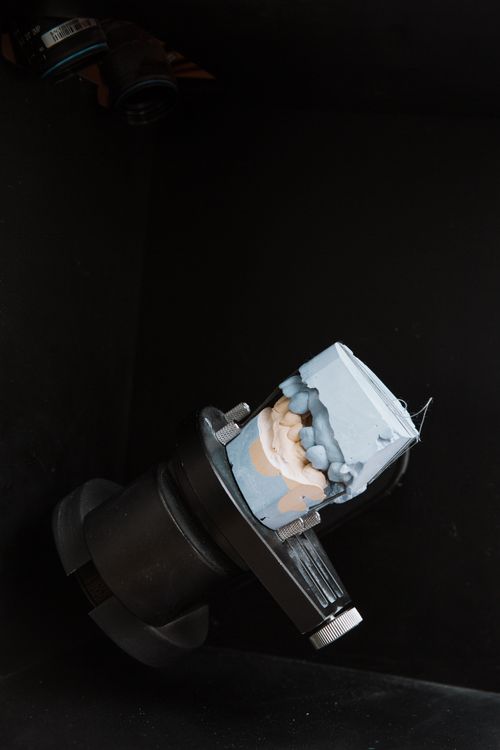
Step 1: Case Receipt — Digital or Physical
Every crown starts with data from the clinician. In modern digital workflows, this arrives as STL files from an intraoral scanner. In traditional workflows, physical impressions are sent to the lab and either poured in stone or scanned.
Digital submission includes:
- Prepared arch scan (upper or lower)
- Opposing arch scan
- Bite registration scan
- Shade prescription and material specification
The quality of the scan directly determines the accuracy of the crown margin. Voids, distortions, or insufficient gingival retraction at the margin area are the most common reasons for crown remakes — not lab error.
Step 2: Model Preparation (Physical Workflow)
For labs receiving physical impressions, the next step is pouring a stone model. Type IV dental stone is used for high-accuracy crown and bridge work — it has a low setting expansion of 0.08–0.10% and sufficient hardness to survive multiple die trimming steps.
The die is then trimmed and prepared:
- Die trimmed to expose margins
- Spacer applied to die surface to establish cement space (30–50 µm typically)
- Die mounted on articulator with opposing model using bite registration
Step 3: CAD Design
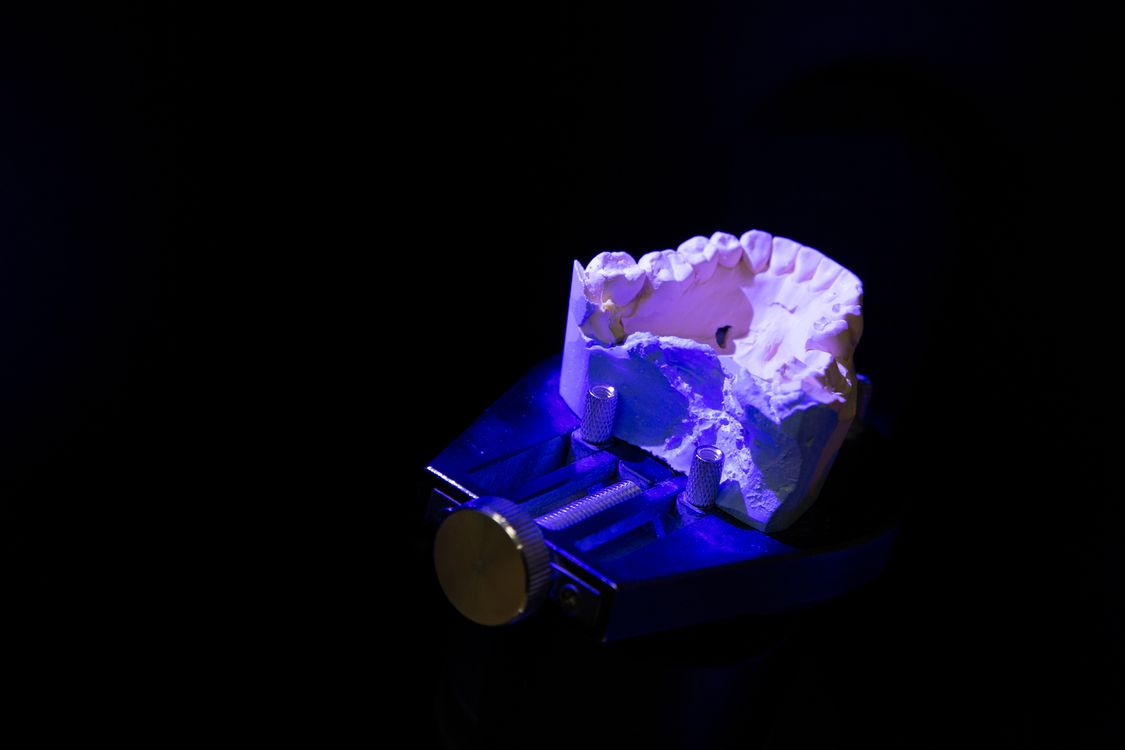
Whether starting from a digital scan or a scanned stone model, the next step is computer-aided design (CAD). The technician imports the scan data into software (3Shape, exocad, or Sirona inLab) and designs the crown.
Key design decisions made at this stage:
- Margin placement: The technician marks the margin line — the most critical design decision affecting fit
- Cement space: Set to 30–50 µm at the margin, opening to 80–100 µm in the interior to allow excess cement to escape
- Occlusal contacts: Designed against the opposing arch scan — contact points placed in correct locations
- Proximal contacts: Contact strength set to appropriate tightness for the clinical situation
- Anatomical form: Crown anatomy selected from library and customised — cusp positions, fissure patterns, ridge morphology
Step 4: Milling (Zirconia and e.max)
The CAD file is sent to the milling unit. For zirconia, the crown is milled from a pre-sintered (chalk-like) blank that is oversized by the precise sintering shrinkage factor — typically 20–25% larger.
Milling parameters:
- Bur diameter: 0.6–1.0 mm carbide burs for zirconia; diamond burs for e.max
- Milling time: 20–45 minutes for a single crown
- Water cooling prevents heat build-up and bur damage
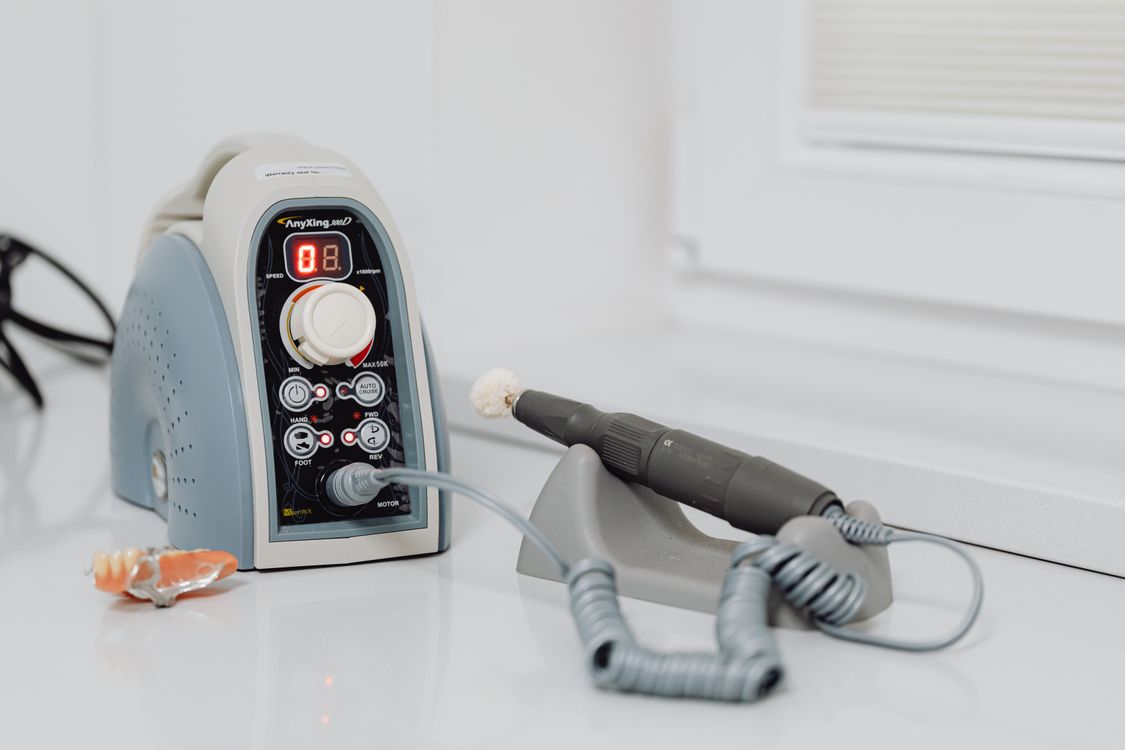 Zirconia Crown Guide | PMMA Temporaries Guide. Sintering furnace — achieving final colour, strength and translucency after milling” title=”Zirconia Crown Sintering — Dental Lab Furnace Process After CAD/CAM Milling” loading=”lazy” style=”max-width:100%;height:auto;border-radius:6px;” />
Step 5: Sintering (Zirconia) or Crystallisation (e.max)
Zirconia sintering: The milled crown is placed in a sintering furnace. Related: Zirconia Crown Guide | PMMA Temporaries Guide. Sintering furnace and heated to 1,400–1,500°C for 2–8 hours. During sintering, the crown shrinks to its correct final size (by the pre-calculated enlargement factor), achieving full density and strength (700–1,200 MPa).
e.max crystallisation: Milled e.max CAD crowns are placed in a crystallisation furnace and heated to approximately 850°C for 25–35 minutes. The glass-ceramic transitions from its pre-crystallised (blue) state to its final translucent form at 360–400 MPa.
Step 6: Characterisation and Glazing
After sintering/crystallisation, the crown receives surface treatment to match the prescribed shade and achieve natural-looking surface texture:
- Staining: Extrinsic stain applied to achieve shade gradients, characterisation marks (brown fissures, white hypocalcifications)
- Glazing: A thin glaze layer is fired over the surface — provides final surface lustre and seals the staining
- Hand-polishing: Alternative to glazing for posterior cases — polishing achieves a smooth surface with less friction against opposing teeth
Step 7: Quality Control
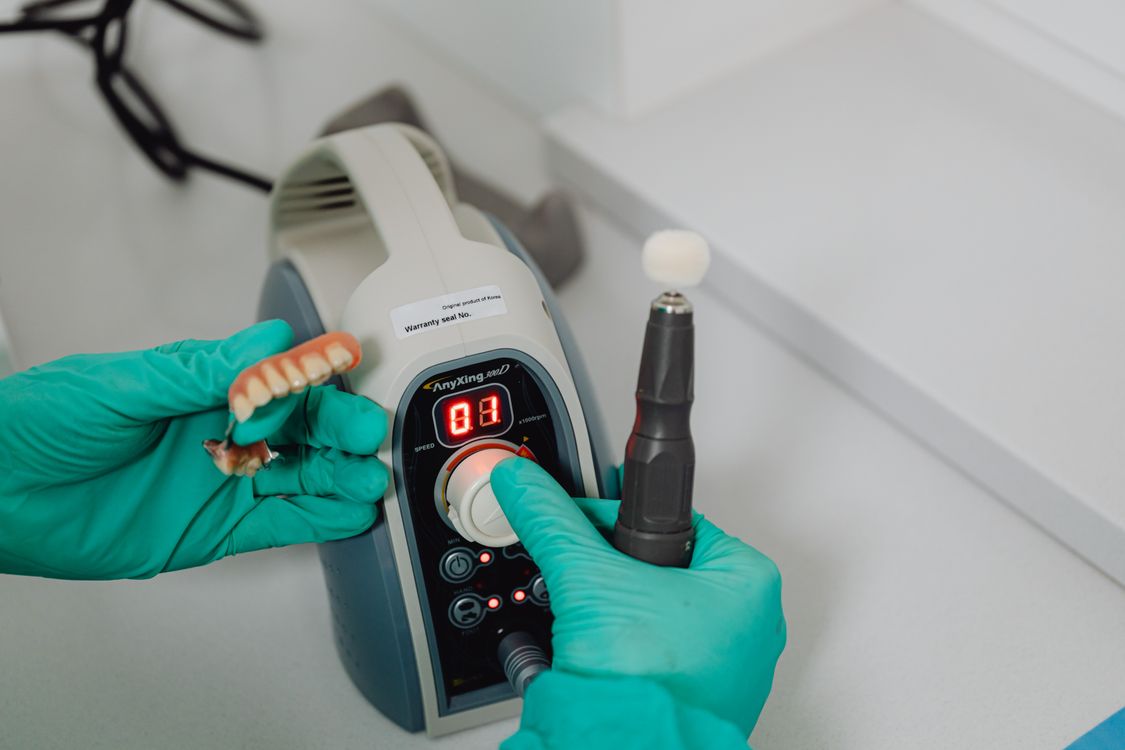
Before packaging, each crown is checked against the following criteria:
- Margin fit on the die or model — no visible gap, complete seating
- Proximal contacts — verified with shim stock or articulating film
- Occlusal contacts — checked in maximum intercuspation and lateral excursions
- Shade match — compared against shade tab under D65 standard lighting
- Surface integrity — no cracks, chips, or glaze defects
Total Production Time
| Step | Time |
|---|---|
| Case receipt and setup | 30–60 min |
| CAD design | 20–45 min |
| Milling | 20–45 min |
| Sintering/crystallisation | 2–8 hours |
| Characterisation and glazing | 30–60 min + firing |
| Quality control and packaging | 15–30 min |
| Total lab production time | ~1–2 working days |
Order Crowns From World Dental Lab
Standard 5-day and rush 2-day turnaround. All crown types: zirconia, e.max, PFM, full-cast. White-label packaging for lab partners.
